
How AI is Revolutionizing Cybersecurity Defense Systems
How AI is Revolutionizing Cybersecurity Defense Systems
 admin
admin
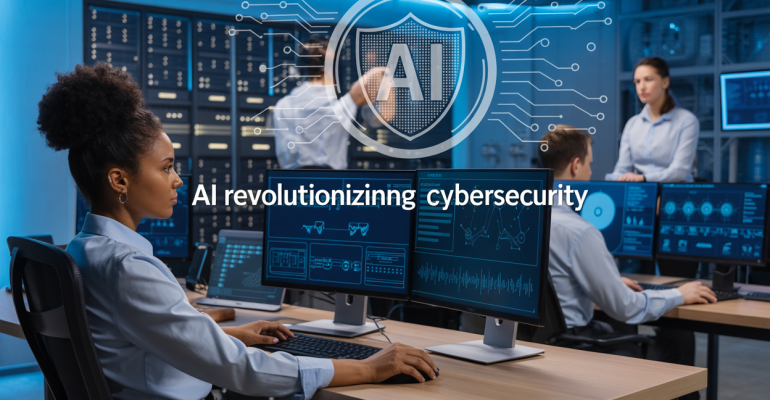
Cyber threats are evolving faster than ever, and traditional security systems simply can’t keep up. That’s where AI cybersecurity steps in as a game-changer, transforming how organizations protect their digital assets. This guide is for IT professionals, security analysts, and business leaders who want to understand how artificial intelligence is reshaping cybersecurity defense automation.
AI-powered security systems are already detecting threats that would slip past human analysts, responding to attacks in milliseconds rather than hours. Machine learning security algorithms learn from every attack attempt, getting smarter with each interaction and building stronger defenses over time.
We’ll explore how automated threat detection uses AI to spot suspicious patterns before they become full-blown breaches. You’ll also discover how machine learning cyber defense enhances real-time security monitoring, giving security teams unprecedented visibility into network activities. Finally, we’ll cover how intelligent threat prevention streamlines security operations through natural language processing and automated security management, freeing up your team to focus on strategic initiatives rather than routine tasks.
AI-Powered Threat Detection and Prevention

Real-time Malware Identification and Blocking
AI cybersecurity systems now identify and stop malicious software faster than ever before. Traditional antivirus programs rely on signature databases that need constant updates, but AI-powered security systems learn patterns and behaviors in real-time. These systems analyze file characteristics, network traffic, and system behaviors to spot threats instantly.
Machine learning algorithms process millions of data points per second, comparing incoming files against known malware patterns while also detecting suspicious activities that haven’t been seen before. When a potential threat appears, automated threat detection kicks in immediately, quarantining the file and preventing it from executing.
The speed advantage is game-changing. While conventional security tools might take hours or days to identify new malware variants, AI systems catch them in milliseconds. This rapid response prevents malware from spreading across networks and causing widespread damage.
Advanced Behavioral Analysis for Zero-day Attacks
Zero-day attacks represent some of the most dangerous threats because they exploit previously unknown vulnerabilities. AI-powered security systems excel at catching these attacks through sophisticated behavioral analysis rather than relying on known threat signatures.
These systems create baseline profiles of normal user and system behavior, then flag anything that deviates from established patterns. Machine learning cyber defense algorithms monitor:
- Process execution patterns: Unusual program launches or system calls
- Network communication: Abnormal data transfers or connection attempts
- File system activities: Unexpected file modifications or creations
- User behavior: Login patterns, application usage, and data access
When the system detects anomalous behavior that suggests a zero-day exploit, it immediately isolates the affected system and analyzes the threat. This proactive approach catches attacks that would slip past traditional security measures.
Automated Vulnerability Scanning and Patching
Artificial intelligence network security extends beyond threat detection to include comprehensive vulnerability management. AI systems continuously scan network infrastructure, applications, and endpoints to identify security weaknesses before attackers can exploit them.
Automated security management tools prioritize vulnerabilities based on:
| Priority Level | Factors Considered |
|---|---|
| Critical | Public exploits available, network exposure, business impact |
| High | Known attack vectors, sensitive data access, system importance |
| Medium | Limited exposure, complex exploitation requirements |
| Low | Theoretical risks, minimal business impact |
Once vulnerabilities are identified and prioritized, intelligent threat prevention systems can automatically deploy patches during maintenance windows. This reduces the time between discovery and remediation from weeks to hours.
Predictive Threat Intelligence Gathering
AI security monitoring goes beyond reactive measures by predicting future attack trends and threats. Machine learning security algorithms analyze vast amounts of threat data from global sources, including:
- Dark web monitoring for emerging attack tools
- Threat actor communication patterns
- Malware evolution trends
- Industry-specific attack patterns
This predictive capability helps organizations prepare for threats before they materialize. AI systems can adjust security postures, update detection rules, and strengthen defenses based on anticipated attack vectors.
The intelligence gathering process includes natural language processing to analyze threat reports, security bulletins, and underground forums where cybercriminals discuss new techniques. This comprehensive approach gives security teams unprecedented visibility into the threat landscape and enables proactive defense strategies.
Machine Learning Enhances Security Monitoring

Anomaly detection for unusual network activity
Machine learning security systems excel at spotting patterns that would slip past traditional security tools. These AI-powered security systems continuously analyze network traffic, learning what normal operations look like for your specific environment. When something unusual happens – like data flowing to an unexpected location or login attempts from impossible geographic locations – the system flags it immediately.
Advanced algorithms can process millions of data points per second, identifying subtle deviations that human analysts might miss. They track everything from packet sizes and connection frequencies to protocol usage and timing patterns. This deep level of analysis means even sophisticated attacks that mimic legitimate traffic get caught.
The beauty of machine learning cyber defense lies in its ability to adapt. As attackers evolve their methods, the system learns from new threats and adjusts its detection capabilities. This creates a dynamic defense that gets stronger over time, unlike static rule-based systems that become outdated quickly.
User behavior analytics for insider threat prevention
AI security monitoring has transformed how organizations detect insider threats by creating detailed behavioral profiles for every user. These systems track login times, application usage, file access patterns, and data movement to establish a baseline of normal activity for each employee.
When someone suddenly accesses sensitive files they’ve never touched before, downloads large amounts of data, or works at unusual hours, the system raises alerts. The technology goes beyond simple rule violations – it understands context and can distinguish between legitimate business needs and potentially malicious behavior.
Machine learning algorithms can detect subtle changes in user patterns that might indicate compromised accounts or malicious insiders. They analyze typing patterns, mouse movements, and even the applications users typically access. This granular level of monitoring helps security teams catch threats before they cause significant damage.
Automated incident response and containment
When threats are detected, automated security management systems can respond faster than any human team. These systems can immediately isolate affected systems, block suspicious IP addresses, and quarantine potentially malicious files – all within seconds of detection.
The automation extends to evidence collection and analysis. AI systems can capture forensic data, analyze attack vectors, and even begin remediation processes while security teams are still being notified. This speed is crucial when dealing with fast-moving threats like ransomware or advanced persistent threats.
Intelligent threat prevention systems can also coordinate responses across multiple security tools. They might simultaneously update firewall rules, modify access controls, and alert relevant stakeholders based on the type and severity of the threat detected. This orchestrated response ensures comprehensive protection without requiring manual intervention for every incident.
Natural Language Processing Strengthens Security Operations

Automated Security Report Generation and Analysis
Natural language processing transforms how security teams handle the overwhelming volume of security reports and incident documentation. AI-powered security systems now automatically generate comprehensive reports by analyzing multiple data sources, including network logs, security alerts, and threat intelligence feeds. These systems create detailed incident summaries that would typically take analysts hours to compile manually.
The technology excels at extracting key information from unstructured security data and presenting it in standardized formats that security professionals can quickly digest. Machine learning algorithms identify patterns across thousands of security events, correlating seemingly unrelated incidents to reveal broader attack campaigns. This automated analysis helps security teams understand threat landscapes more effectively while reducing the time spent on manual documentation.
Intelligent Phishing Email Detection and Filtering
NLP-driven phishing detection represents a major advancement in email security. These AI cybersecurity solutions analyze email content, sender behavior, and linguistic patterns to identify sophisticated phishing attempts that traditional filters miss. The technology examines subtle language cues, urgency indicators, and context clues that human attackers use to manipulate recipients.
Modern phishing attacks often use personalized information and contextually relevant content to bypass traditional security measures. NLP systems counter these tactics by understanding the semantic meaning behind email messages and detecting inconsistencies in communication patterns. They analyze writing styles, grammatical structures, and vocabulary choices to identify emails that don’t match legitimate sender profiles.
Enhanced Threat Hunting Through Data Correlation
Threat hunting becomes significantly more effective when NLP capabilities process vast amounts of unstructured security data. Security analysts can now search through logs, reports, and threat intelligence using natural language queries instead of complex database commands. This capability democratizes threat hunting by allowing team members with varying technical backgrounds to conduct sophisticated investigations.
The technology correlates information from disparate sources, including social media threat discussions, dark web communications, and internal security logs. AI security monitoring systems identify connections between seemingly unrelated data points, revealing attack patterns that human analysts might overlook. This comprehensive correlation capability enables proactive threat identification before attacks reach critical infrastructure.
Real-time Security Alert Prioritization
Security operations centers face alert fatigue from the sheer volume of notifications generated by security tools. NLP-powered systems address this challenge by intelligently prioritizing alerts based on context, severity, and potential impact. These systems analyze alert descriptions, threat indicators, and historical incident data to rank security events by importance.
The technology considers multiple factors when prioritizing alerts, including asset criticality, threat actor sophistication, and potential business impact. Machine learning security algorithms continuously refine their prioritization logic based on analyst feedback and incident outcomes. This intelligent filtering ensures that security teams focus their attention on the most critical threats while reducing time wasted on false positives.
Improved Security Team Communication and Coordination
NLP enhances collaboration within security teams by automatically generating status updates, incident summaries, and progress reports. These systems track ongoing security investigations and create natural language updates that keep stakeholders informed without requiring constant manual communication. Team members can query AI systems using conversational language to get project updates or incident status information.
The technology also facilitates knowledge sharing by automatically documenting lessons learned from security incidents and making this information searchable using natural language queries. Security teams can quickly access relevant historical information when facing similar threats, improving response times and decision-making quality. This enhanced communication capability ensures that critical security knowledge doesn’t remain siloed within individual team members.
AI-Driven Authentication and Access Control

Biometric authentication with deep learning accuracy
Modern AI cybersecurity systems are transforming how we verify user identities through sophisticated biometric authentication powered by deep learning algorithms. These AI-powered security systems can analyze multiple biological markers simultaneously – fingerprints, facial features, iris patterns, voice characteristics, and even behavioral biometrics like typing patterns or gait recognition.
Deep learning models excel at recognizing subtle patterns in biometric data that traditional systems might miss. For instance, facial recognition systems now achieve over 99% accuracy by analyzing hundreds of facial landmarks, even adapting to changes in lighting, aging, or minor physical alterations. Voice recognition systems can detect unique vocal characteristics that remain consistent even when someone has a cold or speaks in different emotional states.
The real game-changer is how these systems learn and improve over time. Machine learning security algorithms continuously refine their accuracy by processing new biometric samples, making them increasingly difficult to fool with spoofing attempts. Some advanced systems combine multiple biometric factors, creating a virtually unbreakable authentication layer that’s both user-friendly and highly secure.
Risk-based adaptive authentication systems
Intelligent threat prevention now relies heavily on context-aware authentication that adapts security measures based on real-time risk assessment. These AI-driven systems evaluate dozens of factors simultaneously – login location, device fingerprinting, time patterns, network behavior, and user habits – to determine the appropriate level of security verification needed.
When someone logs in from their usual device at their typical time from a recognized location, the system might require only basic credentials. However, if the same user attempts access from an unfamiliar location using a new device at an unusual hour, automated threat detection kicks in, triggering additional verification steps like multi-factor authentication or security questions.
| Risk Level | Authentication Requirements | AI Analysis Factors |
|---|---|---|
| Low | Basic credentials | Known device, usual location, typical time |
| Medium | MFA required | New device OR different location |
| High | Enhanced verification | Multiple anomalies detected |
| Critical | Admin approval needed | Suspicious patterns + high-value access |
These systems learn individual user patterns, making authentication smoother for legitimate users while creating significant barriers for potential attackers. The beauty lies in their ability to balance security with user experience – legitimate users rarely notice the enhanced protection, while malicious attempts face increasingly complex challenges.
Continuous user verification and session monitoring
Traditional authentication stops at the login screen, but AI security monitoring extends protection throughout the entire user session. Continuous verification systems analyze ongoing user behavior patterns, detecting potential account takeovers or unauthorized access even after successful initial authentication.
These automated security management systems monitor keystroke dynamics, mouse movement patterns, application usage habits, and data access behaviors. Machine learning cyber defense algorithms establish baseline behavioral profiles for each user, then continuously compare current activity against these established patterns. Any significant deviations trigger immediate security responses – from requesting re-authentication to automatically terminating suspicious sessions.
Behavioral analytics can detect when someone else is using a legitimately authenticated account by analyzing subtle differences in how people interact with systems. For example, if a user typically types at 60 words per minute with specific rhythm patterns, but current activity shows 90 words per minute with different timing, the system flags this anomaly for investigation.
Session monitoring also tracks privilege escalation attempts, unusual file access patterns, and abnormal network communications. This creates multiple layers of protection where artificial intelligence network security systems maintain vigilance long after the initial login, ensuring that compromised credentials don’t lead to extended unauthorized access or data breaches.
Automated Security Infrastructure Management

Self-healing network security configurations
Imagine security systems that fix themselves before problems even surface. AI-powered security systems now make this possible through intelligent configuration management that adapts to changing threat landscapes without human intervention. These systems continuously monitor network behavior, identify vulnerabilities, and automatically adjust security parameters to maintain optimal protection.
Machine learning algorithms analyze network traffic patterns, device behaviors, and security events to predict potential weaknesses in current configurations. When anomalies are detected, the system automatically implements corrective measures, whether that’s adjusting access controls, modifying security policies, or reconfiguring network segments. This proactive approach prevents security gaps that could be exploited by attackers.
The beauty of self-healing configurations lies in their ability to learn from each incident. Every security event becomes training data that improves future responses. Networks become more resilient over time, developing immunity to recurring attack patterns while maintaining seamless operations.
Dynamic firewall rule optimization
Traditional firewall management often creates bottlenecks with static rules that become outdated or overly restrictive. AI cybersecurity solutions revolutionize this approach through dynamic rule optimization that continuously fine-tunes firewall policies based on real-time network analysis.
Machine learning security algorithms process massive amounts of network data to identify patterns in legitimate traffic flows. This intelligence enables automated security management systems to create more precise rules that balance security with performance. Rules adapt based on:
- Traffic pattern analysis – Understanding normal vs. suspicious communication flows
- Application behavior mapping – Learning how different applications communicate
- User activity profiling – Recognizing typical user access patterns
- Threat intelligence integration – Incorporating latest attack signatures and indicators
Dynamic optimization reduces false positives while strengthening defense against genuine threats. The system automatically removes redundant rules, consolidates overlapping policies, and creates exceptions for legitimate business activities that might otherwise be blocked.
Intelligent load balancing for security appliances
Security infrastructure performance directly impacts business operations. AI-powered security systems employ intelligent load balancing to distribute security processing across multiple appliances, ensuring consistent protection without performance degradation.
Smart algorithms monitor the health, capacity, and response times of security devices in real-time. When one appliance approaches capacity limits, traffic automatically redistributes to available resources. This prevents security bottlenecks that could create blind spots or slow down legitimate business activities.
| Load Balancing Factor | AI Optimization Approach |
|---|---|
| Processing Capacity | Real-time resource monitoring |
| Response Time | Predictive performance analysis |
| Threat Complexity | Dynamic workload distribution |
| Geographic Location | Latency-aware traffic routing |
Machine learning cyber defense systems also predict future capacity needs based on historical data and current trends. This predictive capability enables proactive scaling decisions, ensuring security infrastructure stays ahead of demand rather than reacting to capacity issues.
Proactive system hardening recommendations
Rather than waiting for vulnerabilities to be exploited, artificial intelligence network security systems proactively identify and recommend system hardening measures. These recommendations go beyond basic security updates to include configuration optimizations tailored to each organization’s specific environment and risk profile.
AI algorithms analyze system configurations, installed software, network architecture, and usage patterns to identify potential security improvements. The system considers factors like compliance requirements, business processes, and operational constraints when generating recommendations. This ensures suggested changes enhance security without disrupting critical business functions.
Automated security management platforms provide prioritized hardening recommendations with clear implementation guidance. Security teams receive actionable insights about which changes will have the greatest impact on their security posture, helping them allocate resources effectively. Regular reassessment ensures recommendations stay relevant as systems and threats evolve.

AI has completely changed how we protect our digital systems, making cybersecurity faster, smarter, and more reliable than ever before. From AI-powered threat detection that spots dangers in real-time to machine learning systems that continuously monitor and learn from security patterns, these technologies are giving us the upper hand against cybercriminals. Natural language processing helps security teams understand and respond to threats more quickly, while AI-driven authentication ensures only the right people get access to sensitive information.
The future of cybersecurity isn’t just about having better tools – it’s about having intelligent systems that can think, adapt, and respond automatically. As cyber threats become more sophisticated, AI-powered defense systems are our best bet for staying ahead of the curve. If your organization hasn’t started exploring AI security solutions yet, now is the time to begin that conversation. The question isn’t whether AI will transform cybersecurity – it’s whether you’ll be ready to embrace these game-changing technologies before your competitors do.